

 +86 512 6938 3264
https://mp.weixin.qq.com/s/_XH1ZeFItdrdgMgHcZsyKg
For a long time, cutting tools in most machining factories have been managed primarily as consumables.
The focus has often been on two questions:
How many tools were used?
How much was spent?But when manufacturers look deeper —
Were those consumptions reasonable?
Could tool usage be further optimized?
What actually happened during the cutting process?Clear answers are often difficult to obtain.
This disconnect — where costs are visible but the process itself remains unclear — is becoming one of the key bottlenecks limiting manufacturing efficiency.

From Tool Management to Cutting Management
As tungsten carbide powder prices continue to fluctuate, the room for further tool price reductions is rapidly shrinking. At the same time, manufacturing environments are becoming increasingly uncertain.
More manufacturers are realizing that tools should no longer remain only at the inventory and issuance level.
They need to become part of the cutting process itself — continuously monitored, analyzed, and optimized.
In 2026, Knowhy officially introduced its:
Cutting Management Full-Stack Solution
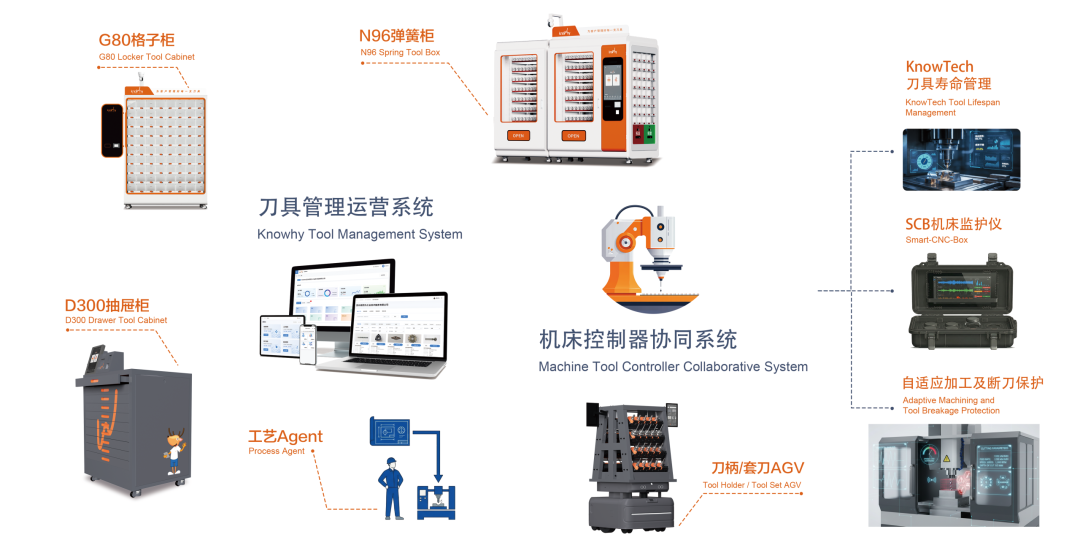
At its core, this solution is designed to transform tools from “consumables” into controllable cutting capability.
This means tools are no longer treated merely as cost items.
Instead, they become production factors that directly influence productivity, cycle stability, machining quality, and operational efficiency — assets that can be continuously analyzed and optimized.
One System Across the Entire Cutting Process
Unlike traditional solutions centered around standalone equipment or software, Knowhy has built an integrated ecosystem designed around the entire cutting workflow.
Built on a centralized Tool Management Operating System, the platform continuously records and connects tool flow, usage data, and machine conditions.
The ecosystem includes:
Smart Tool Cabinets for standardized and traceable tool issuance and return management
Tool Life Management for real-time cutting load monitoring and optimized tool replacement timing
Machine Monitoring Devices for visualized equipment condition tracking and predictive maintenance
Process Agent technology for multi-source data analysis and process decision support
This is not simply about “putting data into the cloud.”
It is about allowing data to continuously flow through the shop floor and actively participate in production operations.
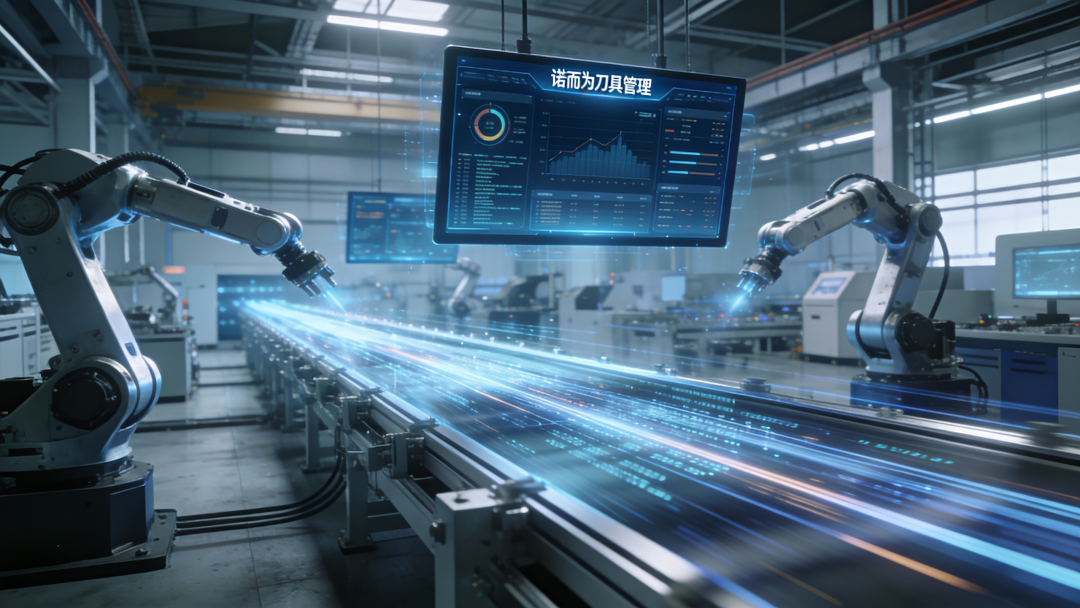
Image by AI
From Data Recording to Decision-Making
From Standalone Products to a Continuously Operating System
Within this ecosystem, the role of data fundamentally changes.
Traditionally, manufacturing data was mainly used for post-process statistics and reporting.
In Knowhy’s Cutting Management Ecosystem, data becomes directly involved in real-time production decisions.
For example:
How much tooling should be prepared
→ Based on actual consumption and inventory dynamicsWhen tools should be replaced
→ Based on real cutting life and load conditionsWhether abnormalities are occurring
→ Through real-time monitoring and alertsHow machining can be optimized
→ Through historical process and performance analysis
As a result, many decisions that previously relied heavily on experience can now be supported by continuously evolving production data.
For manufacturers, the real transformation is not simply “adding another system.”
The real change is establishing a continuously operating capability framework on the shop floor.
Tool management is no longer a series of isolated actions.
Machines, tools, and machining processes are no longer disconnected from one another.
Instead, they become interconnected through data.
At the same time, engineers and operators can spend less time on repetitive checking and calculations, and focus more on process optimization and decision-making.
From Cost Items to Production Capability
Ultimately, the result is a shift in how tooling is understood.
Tools are no longer treated as passive consumable costs.
They become continuously optimizable production capability that directly impacts machining stability, product quality, and manufacturing efficiency.
For manufacturers seeking new ways to reduce cost and improve performance, process-driven and data-driven cutting management may represent a far more sustainable competitive advantage than price competition alone.