

 +86 512 6938 3264
This year’s Spring Festival Gala put AI center stage.
From interactive digital avatars to real-time generative choreography, AI was no longer just a backstage technology — it became the performer. Visually stunning. Emotionally engaging. A celebration of what AI can do.
But when we shift the lens from stage lights to the shop floor, the question changes:
In machining, is AI a performance capability — or a production capability?
01
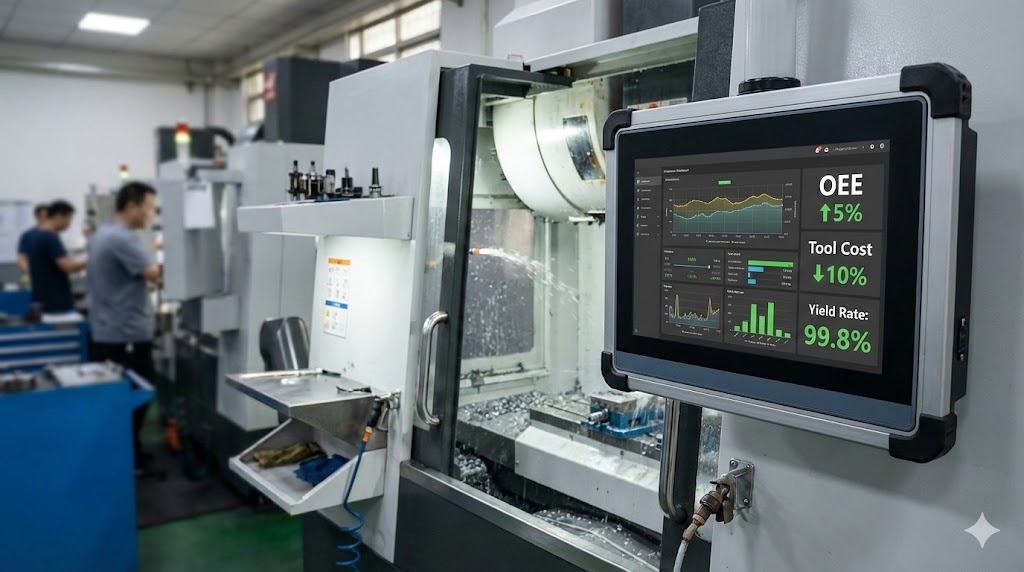
In Manufacturing, AI Must Deliver Measurable Results
On stage, AI enhances experience — smoother interaction, more realistic digital personas, faster content generation.
In machining, AI is judged by only three metrics:
Efficiency. Cost. Stability.
It must answer practical questions:
Is the process plan better optimized?
Is tool selection more precise?
Has machine utilization improved?
Has output per engineer increased?
Without a closed data loop and verified ROI, AI remains a technology demo — not an industrial application.
02
Machining Needs Scenario-Based Agents
The Gala showcased the power of general large models — understanding, generating, conversing.
But what machining enterprises truly need — and what frontline engineers handling production scheduling and trial cutting actually want — is not a chatbot.
They need:
A domain model that understands machining semantics
A decision system integrating inventory, tool parameters, and historical machining data
An execution engine that directly generates process routes and tool lists
This is not conversational AI.
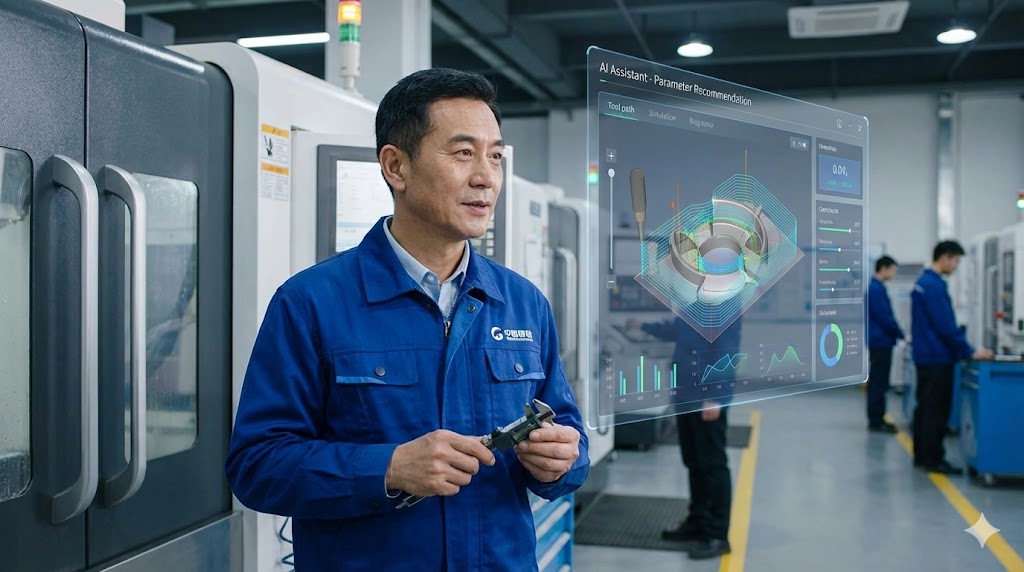
This is a vertical, scenario-driven Process Agent.
Its real value is not in answering questions, but in:
Replacing 80% of repetitive process derivation work.
When engineers are freed from endless comparisons, tool matching, and parameter calculations, AI enters the production system — not just the presentation layer.
03
Production-Grade AI Must Be Embedded into Workflow
Many so-called “AI applications” stop at:
Building a dashboard
Connecting to a large model API
Generating an analysis report
But machining operations run on highly structured workflows.
If AI does not embed into this full chain, it remains an add-on — not a capability upgrade.
Effective industrial AI requires three core capabilities:
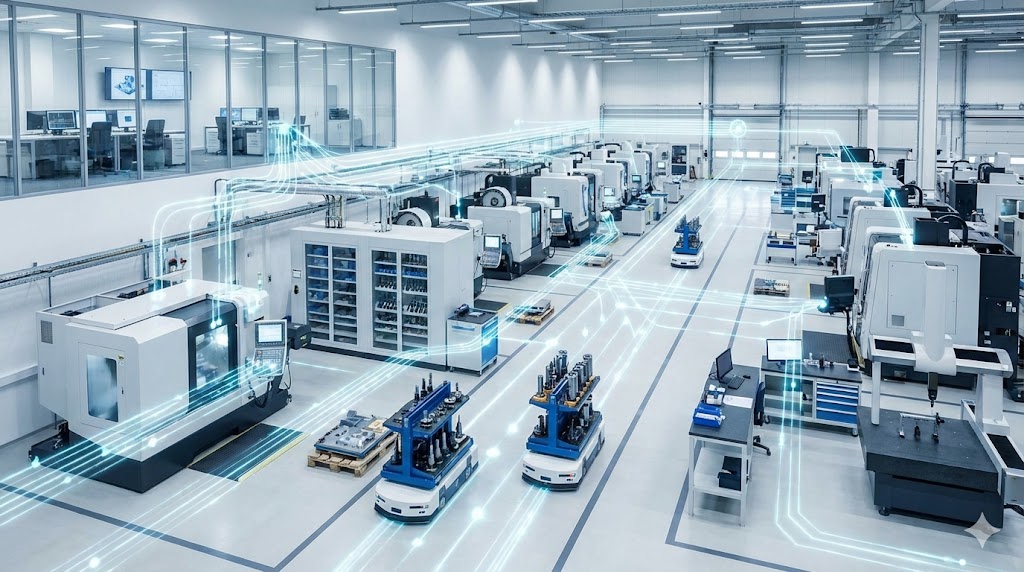
Data Integration — connecting inventory, machines, tooling, and process data
Decision Generation — delivering executable plans, not suggestions
Continuous Optimization — iterating algorithms based on real production feedback
This is production-grade AI.
04
The Industry Inflection Point Has Arrived
The Gala helped the public believe in AI’s potential.
Machining, however, has entered a more practical phase:
Whoever embeds AI into real business workflows gains the next efficiency advantage.
Not AI in slides.
Not AI in showrooms.
But AI that:
Reduces tool selection errors
Lowers inventory capital occupation
Accelerates engineering decisions
Stabilizes yield rates
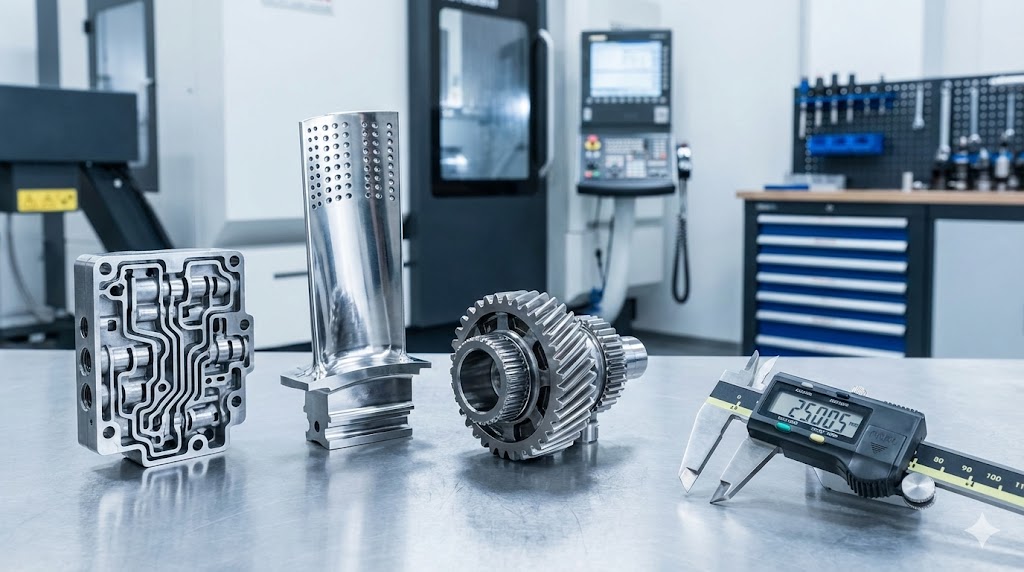
When AI begins to impact unit cost, delivery cycles, and profit structures, it becomes true industrial capability.
After the Applause, the Real Value Begins
The stage is emotional.
The factory is results-driven.
AI earns applause under spotlights.
On the shop floor, it must earn data.
For machining, AI’s meaning is never about appearing intelligent — it is about:
Making engineers stronger.
Making factories more efficient.
Turning data into assets.
The spectacle belongs to the stage.
Productivity belongs to real industrial implementation.
As the noise fades, the intelligent transformation of machining is only beginning.
So what kind of dedicated Agent do frontline engineers — working amid the sound of cutting and machines — truly need beside them every day?
Next time, we’ll continue the conversation.