

 +86 512 6938 3264
To secure a 5% price cut, procurement teams often go all in.
Yet on the shop floor, tools are frequently replaced too early due to a lack of data — quietly wasting up to 30% of their usable lifespan.
This is not negligence.
It is an invisible loss embedded in traditional manufacturing models.
True cost reduction does not stop at the negotiation table.
It begins on the production line — when focus shifts from purchase price to actual value in use.
Avoiding the Trap of “Local Optimization”
Cost reduction efforts often rely heavily on reports.
A 5% drop in tool unit price shows immediate results on paper.
But on the shop floor, the long-term impact tells a different story.
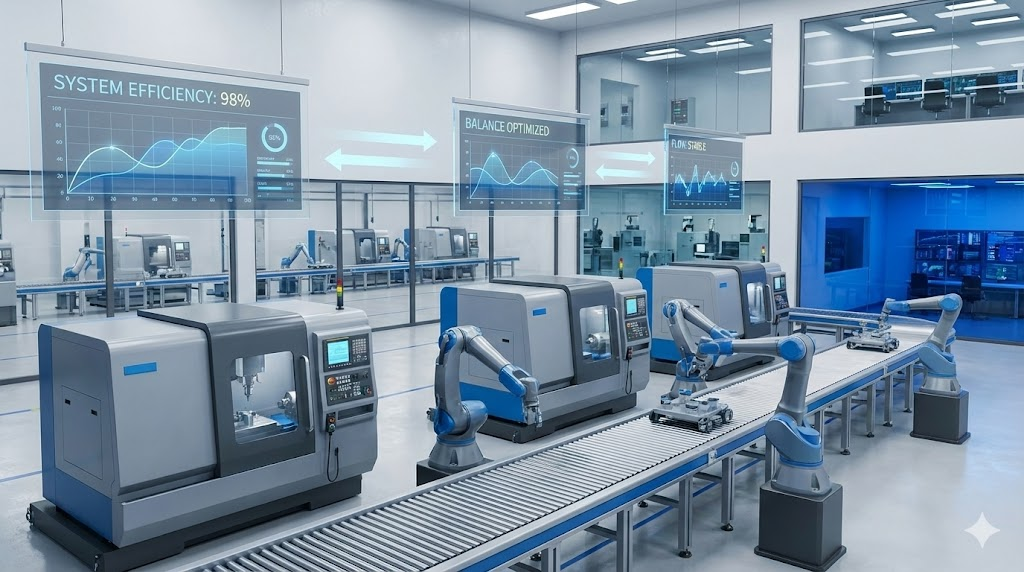
If lower-priced tools fail to match durability requirements, tool changes increase, unplanned downtime rises, and operators replace tools earlier to protect cycle time.
In many cases, efficiency losses per part offset the savings from lower prices.
Reducing cost in isolation — at the expense of system efficiency — is not sustainable.
Real cost reduction means achieving the best input-output ratio while keeping the entire production system stable and efficient.
The Real Costs Are Often Invisible
When tool cost is broken down, it comes down to three questions:
Is the tool replaced at the right time?
Has the replaced tool fully delivered its usable value?
Does the tool change disrupt cycle time?
In reality, these questions are rarely answered with data.
Decisions are often based on experience or intuition, making them hard to review, optimize, or standardize.
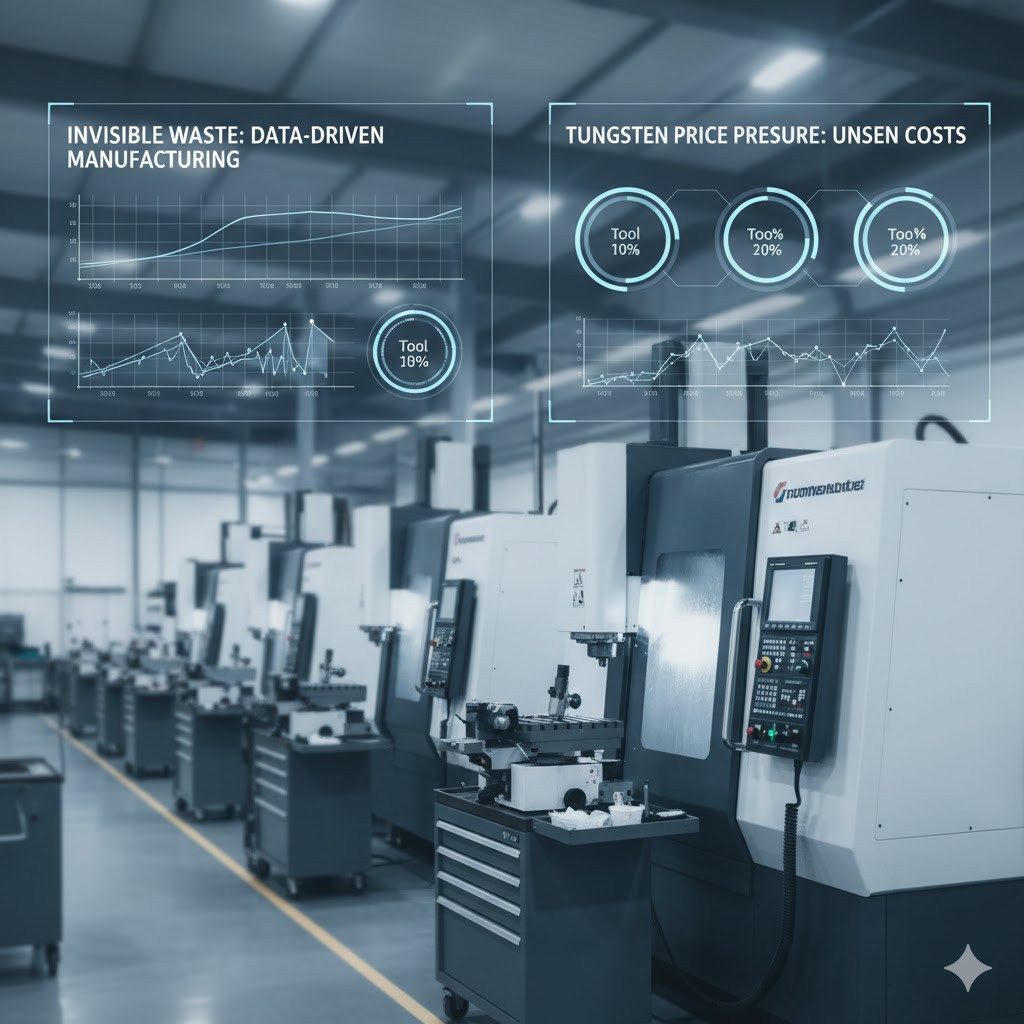
As tungsten prices continue to rise, tool costs increase.
When actual tool condition and remaining value cannot be accurately identified, hidden inefficiencies turn directly into waste.
Tool lifespan management should not remain an untraceable “experience-based zone.”
It must evolve into a measurable, analyzable, and reusable data asset that supports cost control and production stability.
How Knowhy Gets Tool Changes Right
Knowhy focuses on one thing:
Managing every tool’s lifespan with real machining data.
Data-driven tool replacement — no more guesswork
By continuously capturing actual tool life and historical machining data, Knowhy identifies the optimal replacement window under similar cutting conditions.
Visualized parameters, flexible strategies
By tracking speed, feed rate, load, and machining time, Knowhy provides two clear optimization paths:
Efficiency-first:
Fine-tune parameters within a stable, proven range to shorten cycle time while keeping tool life under control.Cost-first:
Optimize cutting strategies to maximize parts per tool.
This is the power of data —
freedom to choose between saving cost and increasing speed, whenever you need.
Final Takeaway
From blind cutting to intelligent tool usage.
Real cost reduction in manufacturing is not achieved on a quotation sheet.
It is achieved through precise control of shop-floor details.
When tool life is no longer a black box, and data truly drives decisions,
tools stop being simple consumables — and become manageable production assets.
Knowhy Tool Lifespan Management
Getting every tool change right.