

 +86 512 6938 3264
Introduction
As year-end delivery peaks approach, every production line is pushed to meet higher takt times and tighter cost pressure within a shorter window.
Under the triple requirement of “faster, steadier, more economical,” tools—often seen as ordinary consumables—quietly become the fulcrum that determines both capacity and cost stability.
This article looks at tool management from the shop-floor perspective and explores how, during year-end sprints, factories can accelerate without compromising cost control.
PART 01 — When Every Node Gets Amplified
A tool’s impact in machining is both direct and indirect:
Direct: cutting efficiency and machining quality
Indirect: tool-change rhythm, inventory turnover, and replenishment responsiveness
During year-end peak periods, concentrated work orders and frequent last-minute adjustments amplify key variables such as tool availability, lifespan distribution, and replenishment speed.
Minutes lost during repeated tool-change waits may offset the gains from optimized equipment utilization.
A single line stoppage caused by missing tools can directly translate into delayed delivery risks.
PART 02 — Three Common Sources of Friction
1. Information latency
Issuance, return, and lifespan data are not updated in time, making it difficult for managers to grasp real consumption patterns.
2. Replenishment rhythm mismatch
Cycle-based replenishment fails to adapt to sudden order increases or line changes, creating gaps between actual takt and supply speed.
3. Hidden costs of tool changes
Waiting, confirming specifications, positioning, and small preparatory actions accumulate into significant time losses.
These are not isolated issues—they reflect the coordination level between production rhythm and material flow.
Smooth equipment performance does not equal overall efficiency; any weak link in the tool chain becomes costly during year-end surges.
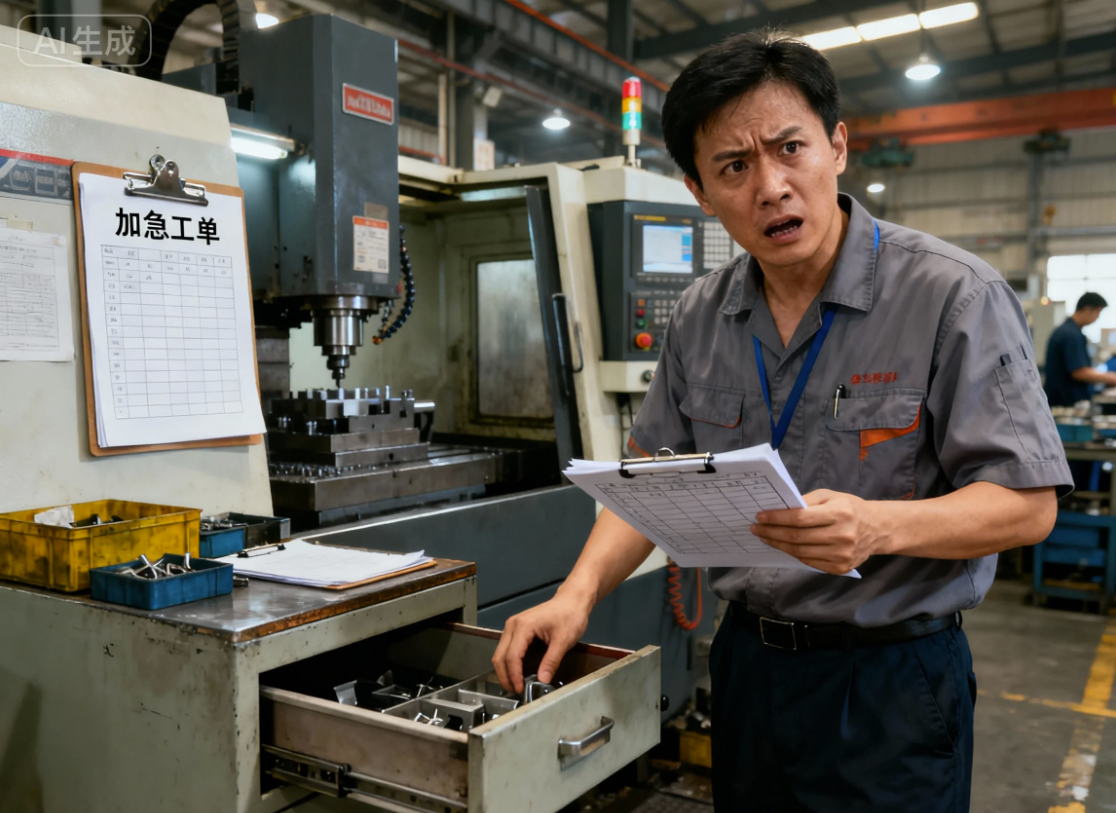
Image generated by AI, for scene illustration only
PART 03 — Four Levers for Improvement
1. Turn behaviors into data
Record issuance, return, and tool-change events as part of daily workflow.
The goal isn’t more reports—it’s accurate, traceable facts.
2. Move to event-driven replenishment
Shift from periodic restocking to triggers based on consumption rate and active work orders.
This reduces delays and prevents unnecessary inventory buildup.
3. Quantify the real cost of tool changes
Measure waiting, confirmation, and tool adaptation time before and after tool changes.
Use this as an entry point to identify optimization opportunities.
4. Small, recurring iterations
Feed insights back into team meetings to form a loop of:
discover → pilot → evaluate → standardize.
These actions are simple, yet they require patience in data accumulation and alignment with real shop-floor conditions.
PART 04 — A Practical Case Approach
During a short high-pressure sprint, start with high-frequency tools:
Track average lifespan and changeover points
Set low-cost, rapid replenishment triggers
Observe takt time changes over two weeks
If tool-change waiting time reduces and inventory turnover accelerates, the rhythm is improving.
Expand the same model to other processes to build repeatable efficiency gains.
Small-scale tests minimize the risk of change and give all teams a common, data-based language, reducing judgment gaps created by differing experience levels.
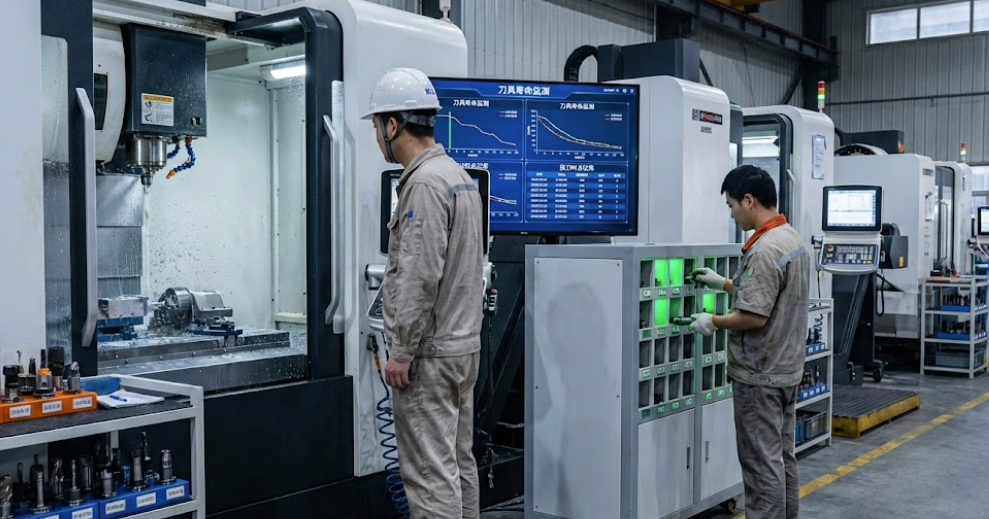
Image generated by AI, for scene illustration only
Conclusion
When the consumption patterns behind takt time become visible, replenishment and decision-making gain clarity.
Tools are not just consumables—they connect planning, equipment, and people.
By turning tool management into a sustainable capability rather than a year-end emergency measure, factories can achieve capacity growth and cost control simultaneously.